Key Facts — RF Skin Tightening for Estheticians:
Radiofrequency skin-tightening machines heat the dermis to provoke collagen remodeling. Esthetic-grade systems generally run from a few thousand dollars into the low tens of thousands, while medical-grade platforms climb much higher. RF works by tissue impedance rather than melanin absorption, so it's broadly considered suitable across Fitzpatrick skin types I through VI, a real difference from many lasers, which target pigment. The three configurations behave differently: monopolar drives energy deepest, bipolar keeps it shallow and controlled, and multipolar spreads several electrodes for adjustable depth. Most estheticians work in the comfortable, "feels warm" dermal range, not the aggressive ablative settings used in medicine. The U.S. Food and Drug Administration regulates these as medical or radiation-emitting devices, and what an esthetician may legally operate, and under whose supervision, depends entirely on your state board. Treatment series usually run several sessions a couple of weeks apart, and per-session consumable cost is typically low. Results vary by skin, age, settings, and operator skill, and RF firms existing skin rather than removing significant laxity the way surgery does.
Radiofrequency Skin Tightening: The Science Behind the Results
Section Guide
- Radiofrequency Skin Tightening: The Science Behind the Results
- Monopolar vs. Bipolar vs. Multipolar RF Technology
- FDA Clearance and Regulatory Considerations
- Treatment Protocols and Clinical Best Practices
- Equipment Investment and ROI Analysis
- Training and Certification Requirements
- Contraindications and Client Safety
- Combining RF with Other Modalities
- Choosing the Right RF Machine for Your Practice
- Frequently Asked Questions
RF skin tightening is controlled heating. The machine pushes a high-frequency alternating current through the skin, and because living tissue resists that current, the resistance turns into heat. Hold the dermis at roughly 40 to 42 degrees Celsius and you trigger two things at once: existing collagen fibers contract right away, and the heat signals fibroblasts to build fresh collagen over the following weeks. Professional devices generally run between about 0.3 and 10 MHz, which is where the name comes from.
That's a completely different mechanism from a laser, which fires a wavelength a target absorbs, whether pigment, hemoglobin, or water. RF doesn't care about color; it heats whatever lies in its path. And that matters in practice for one reason: melanin.
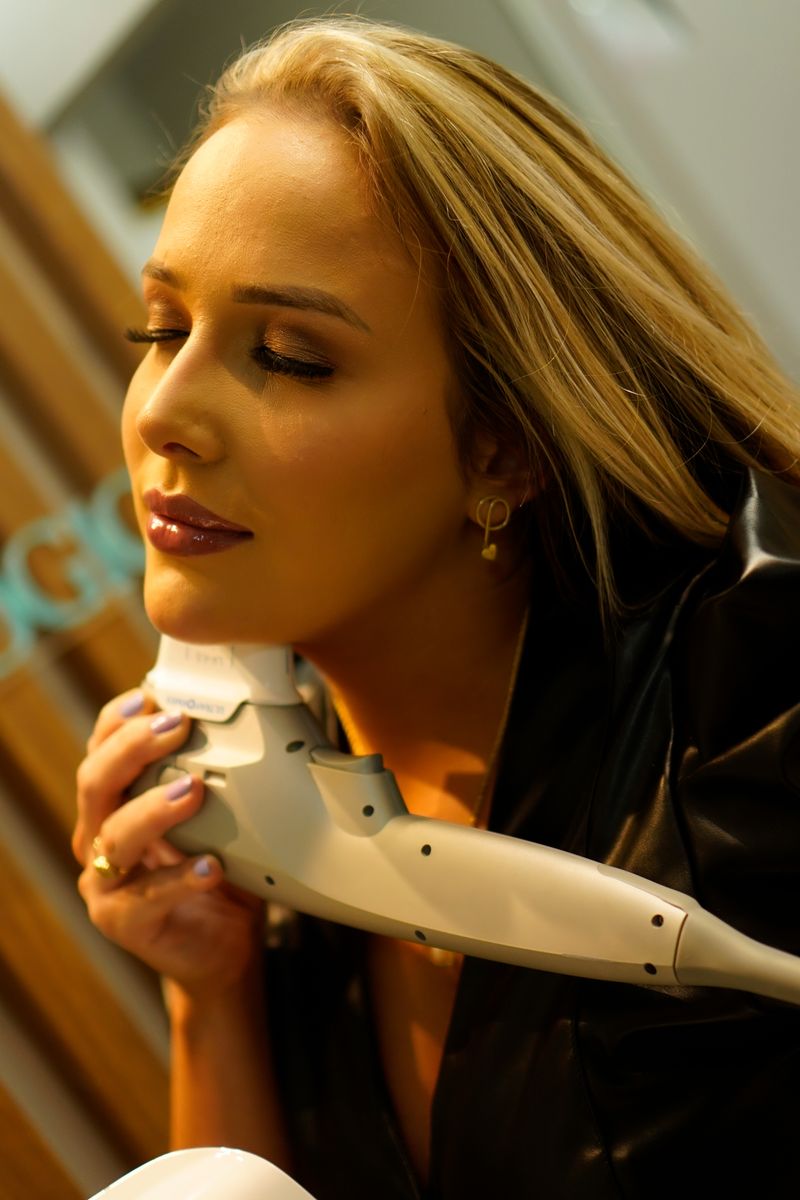
Because RF bypasses pigment, it carries far less risk of the burns, hypopigmentation, and post-inflammatory hyperpigmentation that make laser work hazardous on darker skin. That's why it earned a place in multiethnic clinics and why it's called appropriate across the full Fitzpatrick range. It is not a magic exemption from burns, though: heat is heat, and skin of any color can scald if the energy runs too high or the applicator stalls in one spot.
Be honest with clients about the collagen story. The immediate tightening right after a session is partly genuine fiber contraction and partly transient swelling; the lasting result comes from neocollagenesis, which takes time and builds across a series, so most people don't see the real change for several weeks to a few months. Peer-reviewed work indexed in the U.S. National Library of Medicine has documented this delayed remodeling repeatedly. RF firms skin with mild to moderate laxity. It does not replace a facelift, and any rep promising surgical results is overselling.
Monopolar vs. Bipolar vs. Multipolar RF Technology
The electrode arrangement decides how deep the energy goes, and that's what actually changes outcomes. Three layouts dominate.
Monopolar RF uses one active electrode on the handpiece and a separate return pad on the body. Current travels from the tip, through the patient, to the grounding pad, so it penetrates deep, into the subcutaneous layer in deeper systems. This is the configuration behind the best-known clinic platforms and the most powerful approach for serious dermal heating. It also demands the most respect, since deeper energy and higher power widen the margin for harm, which is why states tend to restrict it to medical use.
Bipolar RF puts both electrodes on the same handpiece, a small distance apart. The current arcs between those points, so it stays shallow and predictable, reaching the upper dermis. You give up depth and get control in return, which is why it shows up constantly in esthetic-grade equipment. The tradeoff is more passes or sessions for a comparable effect.
Multipolar RF uses three or more electrodes and switches the current path among them, varying how deep the energy lands and spreading the heat more evenly. It splits the difference, pairing some of monopolar's depth flexibility with more of bipolar's safety profile. A lot of modern esthetician-facing machines are multipolar, often bundling radiofrequency with other modalities in one platform.
The practical read is a tradeoff between reach and restraint. None of the three is "best" in the abstract; the right one depends on your scope, your clientele, and how much depth your treatment goals actually require.
The table below lays the three side by side. Treat the depth figures as typical published ranges, not guarantees; the spec sheet for your specific device is the number that matters.
| RF Configuration | Electrode Layout | Typical Penetration Depth | Control vs. Depth | Common Setting |
|---|---|---|---|---|
| Monopolar | One active tip plus separate return pad | Deep, into subcutaneous tissue (roughly 15–20 mm in deeper systems) | Maximum depth, least forgiving | Often restricted to medical or supervised settings |
| Bipolar | Two electrodes on one handpiece | Shallow upper dermis (roughly 2–4 mm) | Most controlled, gentlest | Common in esthetic-grade devices |
| Multipolar | Three or more switching electrodes | Adjustable across a range (roughly 1–10 mm depending on system) | Balanced: flexible depth, even heating | Common in multi-modality esthetic platforms |
Operating frequency factors in too: lower frequencies within that 0.3–10 MHz band tend to travel deeper, higher ones concentrate nearer the surface. It's one more reason to read the manufacturer's documentation rather than assume every machine behaves the same.
FDA Clearance and Regulatory Considerations
The FDA regulates radiofrequency skin devices as medical devices, and most reach the market through the 510(k) clearance pathway. "FDA cleared" is not "FDA approved," and neither phrase tells you who is legally allowed to hold the handpiece. Clearance means the agency found the device substantially equivalent to something already sold for a stated use; it says nothing about your license. So be skeptical of marketing: a rep can wave "FDA cleared" around accurately while glossing over that the clearance is for a specific indication, or that the device is cleared only for use under a physician's supervision. Ask what it's cleared for, and ask to see the paperwork.
The bigger question lives at the state level. The FDA governs the device; your state cosmetology or esthetics board governs whether you, personally, can use it, and those rules are all over the map. Some states fold non-ablative RF into an esthetician's scope; others, including California and Texas in their own ways, treat it as a medical procedure requiring a physician, a nurse, or direct supervision. A setup that's legal in one state can be a licensing violation a border away. The American Med Spa Association tracks how these questions play out in medical-spa settings, but the binding answer is whatever your own board says in writing.
So before you spend a dollar, confirm with your state board, in writing if you can get it, that an esthetician at your license level may operate the specific class of RF device you're considering, and what supervision the state requires. Don't rely on the vendor: they want the sale, but the board holds your license. Getting this backwards can mean fines or a suspended license.
Treatment Protocols and Clinical Best Practices
Good RF treatment starts before the machine turns on, with a real consultation: screening for contraindications, photographing the baseline, setting expectations, and getting informed consent. Skipping the screen is how people get hurt, which is why it gets its own section below.
The core principle is simple to say and easy to ignore under a busy schedule: keep the applicator moving and watch the heat. RF brings tissue up to a therapeutic temperature and holds it there briefly; it doesn't blast one spot. Park the handpiece and you stack heat into one area and risk a burn, so most protocols use continuous, overlapping passes across the treatment zone. Temperature feedback is the single most useful feature here; better machines sense skin temperature in real time, so you're not guessing. The target is a comfortable, sustained warmth in that 40–42 degree Celsius range, not a sharp sting; a hot or stinging sensation means back off. Clients should always be able to tell you what they feel, which is one reason general anesthesia and RF don't mix.
A few habits separate careful operators from careless ones. Use the manufacturer's recommended coupling medium, usually a glycerin-based gel, so energy transfers evenly. Start conservative on settings, especially with a new client or machine, and titrate up across sessions as that skin responds. Avoid bony prominences and treat sensitive zones like the upper neck with extra care. Aftercare is mild: clients can expect transient redness and warmth and should use sun protection. If you're building out a room to do this work properly, our esthetician room setup guide covers equipment placement, power, and sanitation flow.
Equipment Investment and ROI Analysis
RF machines span an enormous price range, and the spread reflects real differences in power, depth, build quality, temperature monitoring, and brand. Esthetic-grade systems generally start in the low thousands and run into the low tens of thousands of dollars; medical-grade platforms cost substantially more. Cheaper devices exist, and many are cheap for reasons that show up later: weak output, no temperature feedback, or no support when something breaks.
The economics can work. Per-session consumable cost on most esthetician-grade RF devices is low, just gel and a periodic replacement tip. Session pricing commonly lands in the mid-hundreds, and because results build over a series, you're selling a package rather than a one-off, so a steady flow of clients can pay the machine off over time.
I'd be cautious about any payback math a salesperson hands you, though. The pretty spreadsheets assume a full book at full price with no discounting, no no-shows, and no idle months, and reality includes all of those. The costs that get left off the brochure are the ones that bite: handpiece and tip replacement, maintenance contracts, marketing to keep the chair full, training time, and financing interest. Run your own numbers against a conservative booking rate, not the vendor's best case.
One cost that genuinely belongs in the calculation is insurance. Adding an energy-based device changes your liability exposure, so confirm your professional coverage actually extends to RF treatments before you offer them; our overview of esthetician equipment insurance walks through what to check.
Training and Certification Requirements
There's no single national RF certification that makes you qualified everywhere, which surprises people. The baseline is your esthetics license, plus whatever your state requires for energy-based or "advanced" modalities. Some states have an advanced-practice or master-esthetician tier; some require physician supervision regardless of training; some are quiet in a way that should make you nervous. Start there, because all the training in the world doesn't override a scope-of-practice rule.
On top of the license sits device-specific training, usually the most directly useful kind. The manufacturer or distributor trains you on the exact machine you bought: its settings, safety interlocks, and quirks. Treat this as mandatory even when it's technically optional, because a platform you don't fully understand can hurt someone. Beyond that, independent continuing-education courses and resources from bodies like Associated Skin Care Professionals and the American Med Spa Association round out the science: skin physiology, contraindication screening, and handling an adverse event.
What good training actually buys you is judgment. Anyone can learn which button starts the cycle; the skill is reading skin in real time, recognizing when warmth is becoming too much, and knowing which clients to turn away. It's also your best legal protection if a treatment ever goes sideways.
Contraindications and Client Safety
RF is energy applied to a living person, and the screen is what keeps it safe. Some contraindications are firm enough that you simply do not treat; others call for caution or a physician's sign-off, and when you're unsure, stop and refer.
The hard stops start with implanted electronic devices. Anyone with a pacemaker, an implantable defibrillator, or a similar device should not receive RF, full stop: the current can interfere with how those devices work, and that's a cardiac emergency. Pregnancy is another firm no. Metal implants in the treatment area conduct and concentrate heat in ways you can't see. Active infection, open wounds, or an active flare of acne or eczema in the zone rule it out. Then there's one people forget: dermal fillers and recent injectables. Heat can affect some filler materials, so recent injectable work needs caution and ideally clearance from whoever did the injecting. A history of keloid scarring, certain autoimmune or connective-tissue conditions, recent isotretinoin use, and malignancy are further reasons to pause or refer. None of that replaces a thorough intake form and a real conversation.
The other half of safety is the procedure. The biggest acute risk is a burn, from too much energy, a stalled applicator, poor contact, or ignoring a client who says it's too hot. Keep the handpiece moving, start low, and believe the client about pain. Keep RF away from the immediate eye area unless the device is specifically cleared for it and you're trained for that use. And be honest: RF firms and smooths, it doesn't treat or cure any medical condition, and it won't deliver surgical lift. Promising otherwise is an ethics and a liability problem. For how we frame device risk and the limits of this guidance, see our risk disclosure.
Combining RF with Other Modalities
RF rarely lives alone in a modern treatment room. Layering modalities thoughtfully can address several concerns at once; stacking heat-based and ablative treatments carelessly is a fast route to an injured client.
The most established pairing is microneedling with RF, where insulated needles deliver radiofrequency energy at a controlled depth beneath the surface. It's its own device category, with its own training and scope-of-practice questions often stricter than surface RF, so don't assume your topical-RF clearance covers it. Plenty of practices also sequence RF with non-heat treatments across separate visits: a deep clean from a hydrafacial machine one day, RF firming on another, with microdermabrasion in the rotation for texture. LED phototherapy pairs cleanly, since a LED light therapy machine adds no thermal load; red light near 630 nm and near-infrared near 830 nm are gentle enough to follow RF in the same visit.
The governing rule is restraint about heat. Don't stack two aggressive thermal or ablative treatments on the same skin on the same day; you compound the heat injury and the burn risk. Space the heavy modalities out and check the manufacturer's guidance, because some pairings are validated and some are improvisation.
Choosing the Right RF Machine for Your Practice
Lead with legality. Confirm which class of RF device you're licensed to operate in your state; there's no point falling for a deep monopolar system you can't legally run without a physician on staff. Mild firming and maintenance on a general clientele points toward a controlled bipolar or multipolar esthetic system; aggressive laxity correction is medical territory. Match depth and power to the work you'll genuinely be doing, not the most impressive thing on the floor.
From there, weigh the features that affect safety and outcomes. Real-time temperature monitoring sits near the top of my list, because it turns guesswork into feedback. Look hard at build quality and handpiece design, and whether the system is single-purpose or a platform you'll grow into. Then scrutinize what outlasts the honeymoon: warranty terms, the cost of replacement tips, and whether support answers the phone when a machine goes down mid-day.
And be wary of grey-market imports with thin documentation and no U.S. support; the savings evaporate the first time you need a repair. You're buying a multi-year relationship of training, service, and parts, so weigh the company as much as the box. For more on how we approach this equipment, see our about page.
Frequently Asked Questions
How much does an RF skin tightening machine cost?
It depends on the tier. Esthetic-grade systems generally run from the low thousands into the low tens of thousands of dollars, and medical-grade platforms cost substantially more. Power, depth, temperature monitoring, and brand all move the number, and the cheapest devices are cheap for reasons that surface later. Get a quote and check what's bundled.
Can estheticians perform RF skin tightening treatments?
Sometimes, and it comes down entirely to your state board. Some states include non-ablative RF in an esthetician's scope; others treat it as a medical procedure requiring a physician or supervision. The FDA clears the device, but your state decides who may legally hold it. Confirm with your board before you buy or treat.
How does radiofrequency skin tightening work?
By heating the dermis. A high-frequency current passes through the skin, the skin's resistance produces heat, and bringing the dermis to roughly 40 to 42 degrees Celsius contracts existing collagen and prompts fibroblasts to build new collagen over the following weeks. Because it heats by impedance rather than targeting pigment, it works across skin tones, with results building over a series.
What is the difference between monopolar, bipolar, and multipolar RF?
Depth and control, mainly. Monopolar drives energy deepest and is the most powerful and least forgiving, which is why states most often restrict it to medical settings. Bipolar keeps both electrodes on one handpiece so the current stays shallow and easy to dose. Multipolar uses several switching electrodes to vary depth, between the two. No option is universally best.
How many RF treatments do clients need?
RF is a series, not a single visit. Most protocols run several sessions a couple of weeks apart, because the result depends on collagen forming gradually rather than on any one treatment, and many practices recommend periodic maintenance afterward. The exact count varies with skin, age, device, and goal, so it's a clinical judgment; follow the manufacturer's protocol and adjust to what you see.
Is RF skin tightening safe for all skin types?
This is one of RF's genuine advantages. Because it heats by impedance and ignores melanin, it's broadly considered appropriate across Fitzpatrick types I through VI, without the pigment-related burn and discoloration risk that makes some lasers hazardous on darker skin. Still, "suitable across skin types" is not "risk-free." Heat can burn skin of any color, and every contraindication applies regardless of tone.
What is the ROI on an RF skin tightening machine?
It can be favorable, with a caveat. Consumable cost is low, session pricing usually lands in the mid-hundreds, and because clients buy a series the revenue adds up, so a steady book can amortize the machine over time. But vendor payback projections assume a full schedule at full price, which reality rarely delivers. Build your own estimate against a conservative booking rate, and remember the costs the brochure skips: handpiece replacement, maintenance, and insurance.
What are the contraindications for RF skin tightening?
Several, and some are absolute. Don't treat anyone with a pacemaker, defibrillator, or similar implanted device, and skip pregnancy entirely. Metal implants in the area, active infection, open wounds, and active acne or eczema flares rule it out. Recent dermal fillers and injectables call for caution and ideally clearance from whoever placed them. Keloid history, certain autoimmune conditions, recent isotretinoin use, and malignancy are further reasons to pause and refer.
We researched this from published device specifications, manufacturer documentation, and esthetics and dermatology authorities; device results vary by skin type, settings, and individual response, and this is general education, not medical advice, so always start conservatively and consult a licensed esthetician or dermatologist. editorial terms.
Authoritative sources & references
- U.S. FDA — Radiation-Emitting Products (lasers, IPL, LED, RF)
- Journal of Clinical and Aesthetic Dermatology (JCAD)
- American Society for Dermatologic Surgery (ASDS)
- American Academy of Dermatology (AAD)
- U.S. National Library of Medicine — PubMed Central (PMC)
- NIH — National Institute of Arthritis and Musculoskeletal and Skin Diseases (NIAMS)
Last reviewed: June 4, 2026